
PVC vs. Composite Decks
When it comes to choosing decking material, homeowners today have more options than ever. Among the most popular are PVC and composite decking — two low-maintenance options that have earned a strong following for their durability, longevity, and design versatility. At first glance they seem interchangeable, but there are meaningful differences between the two that can significantly affect your decision.
| PVC Decking | Composite Decking | |
|---|---|---|
| Material | 100% synthetic (polyvinyl chloride) | Plastic blended with wood fibers |
| Durability | Very high | High |
| Maintenance | Very minimal | Low, but occasional cleaning |
| Appearance | Smooth, uniform finish | Natural wood look with visible grain |
| Color Fading | Strong resistance | Moderate to strong resistance |
| Slip Resistance | Strong, especially when wet | Varies by brand and texture |
| Moisture Resistance | Does not absorb water | Resists moisture but contains wood fibers |
| Typical Lifespan | Long-term | Long-term |
Material Difference Between PVC and Composite
PVC Decking
PVC decking is manufactured entirely from polyvinyl chloride — a 100% synthetic, plastic-based material with no wood content whatsoever. Brands like TimberTech Advanced PVC and Clubhouse (both available at The WoodSource) are engineered to resist moisture at the cellular level, making them exceptionally well-suited to Canada's freeze-thaw climate cycles.
Composite Decking
Composite decking is made from a blend of wood fibres and synthetic binders (typically polyethylene or polypropylene). The wood content gives composite boards a more authentic look and feel, and top-tier products like Trex and TruNorth, all carried at The WoodSource, use capped composite technology, where a protective polymer shell wraps the board to seal out moisture and minimize fading.
Durability & Maintenance
Both PVC and composite decking are built to handle years of outdoor exposure, but there are small differences in how they hold up.
PVC decking rates very high for durability because it contains no wood fiber that can break down, swell, or feed mold over time. It stands up well to heavy foot traffic, temperature swings, and constant exposure to the elements. Composite decking is also highly durable, though the wood content in the core can make it slightly more vulnerable to long-term moisture issues if a board is damaged or left uncapped. For most residential decks, both materials will deliver a long, dependable service life, with PVC holding a modest edge in pure resistance to the elements.
PVC decking requires very minimal maintenance. Because the material does not absorb water and has no wood fiber on the surface, it rarely needs more than an occasional rinse to stay looking new.
Composite decking is also low maintenance, but it benefits from occasional cleaning to prevent dirt, pollen, and organic debris from building up on the textured surface. Neither material needs to be sanded, stained, or sealed the way real wood does, which saves significant time and cost over the life of the deck.
If absolute minimum upkeep is your priority, PVC has a slight advantage, but composite is also a low-maintenance alternative.
Appearance
PVC deck boards have a smooth, uniform finish that often resembles painted wood. Because PVC is fully synthetic with no wood fiber in the core, the surface texture and color stay consistent from board to board for a clean, contemporary look.
Composite boards are manufactured to look like stained wood, with a grain you can see and feel. The wood fiber content lets manufacturers emboss realistic grain patterns and gives composite more color variation across the board face, much like natural lumber.
Appearance usually comes down to personal preference: a sleek, uniform finish with PVC, or a richer, wood-like texture with composite.
Colour Fading
PVC decking offers strong resistance to color fading. Its synthetic composition and protective surface layer help it retain its original tone for years, even in full sun.
Composite decking offers moderate to strong fade resistance, and modern capped products have closed much of the gap with a protective polymer shell that shields the board from UV damage. Older or uncapped composite boards may fade more noticeably, so it is worth confirming whether a product is capped before you buy.
In direct sun, PVC tends to hold its color the longest, but a quality capped composite will perform very well.
Slip Resistance
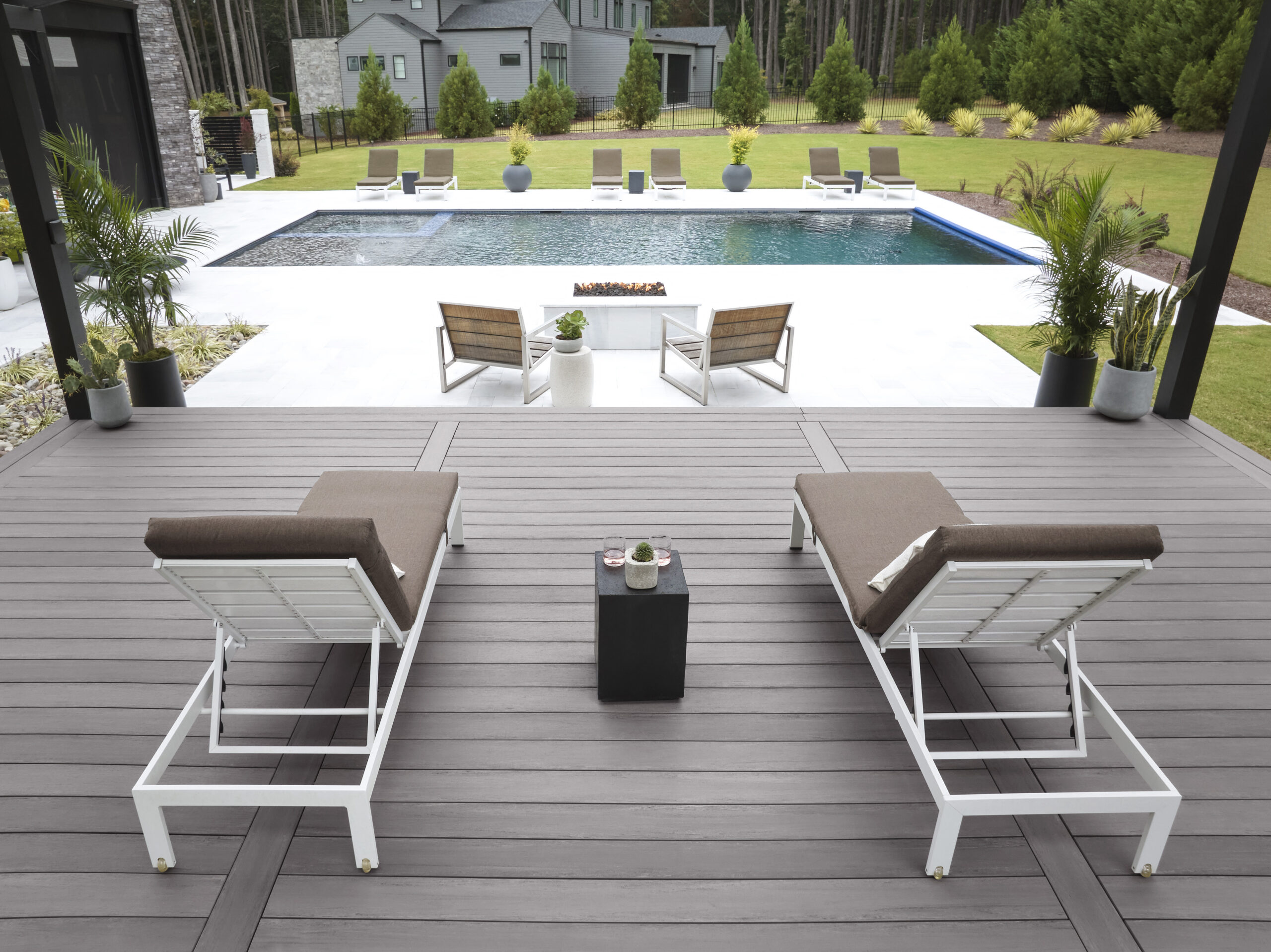
PVC decking generally provides strong slip resistance, especially when wet, thanks to the textured surfaces most manufacturers apply to their boards. This makes it a popular choice for poolside and waterfront decks.
Composite decking varies more by brand and texture, since the grain pattern and surface finish differ between product lines. Some composite boards offer excellent traction while others are smoother, so it is worth checking the specific product rating if slip resistance is a priority.
For wet environments, both materials can perform well, but it pays to compare the surface texture of the exact boards you are considering.
Moisture Resistance
PVC decking does not absorb water at all, since it is made entirely of synthetic material with no organic content. This makes it an excellent choice for humid climates, ground-level decks, and areas with poor drainage.
Composite decking resists moisture well, but it does contain wood fibers, which means an exposed or damaged edge can absorb some water over time. Capped composite products solve most of this concern by sealing the board in a protective shell, but the underlying material still differs from fully waterproof PVC.
If your deck will face constant moisture or sits close to the ground, PVC offers the most peace of mind.
Cost Considerations
Budget is often the deciding factor and both PVC and composites span a wide price range depending on brand, colour, and line.
As a general guide for the Ottawa and Eastern Ontario market:
PVC decking generally averages around $6 – $10 per linear foot while composite decking has a larger range, anywhere between $3 - $12 per linear foot, depending on the brand and line.
Keep in mind that material cost is only part of the equation. Both PVC and composite require pressure-treated substructures, fasteners (CAMO and FastenMaster systems are popular choices we stock), and railing; all of which factor into total project cost.
Download Price Lists
Download our price sheets to plan your project before you order.